


Volkswagen Coolant: What Type of Coolant Do the Models Use?
Most people don’t give coolant a second thought — until there’s a puddle under the car or a warning light on the dashboard. But for Volkswagen owners, it’s worth knowing upfront: Volkswagen coolant isn’t generic. VW engines are engineered to tight tolerances, and the fluid protecting that engine needs to match.
Here at Frank Boucher Volkswagen of Racine in Racine, WI, our service team fields questions about coolant type constantly — because getting it wrong can quietly cause real damage. Here’s everything you need to know.
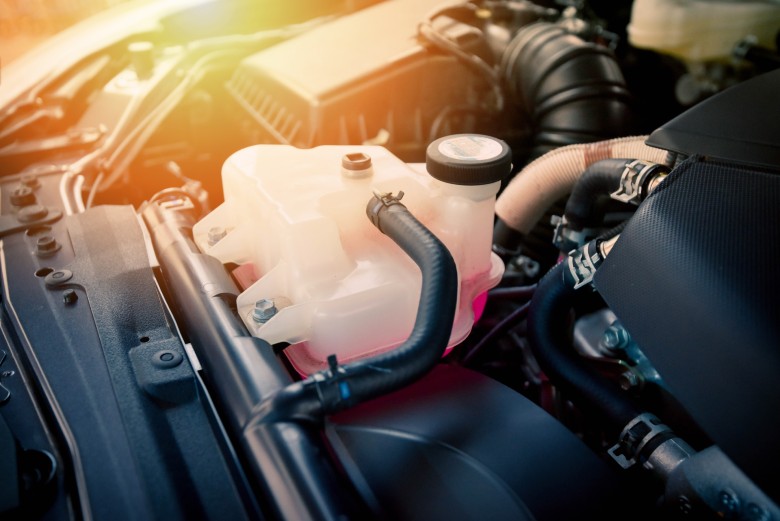
Key Takeaways
- Most Volkswagen models built from 2008 onward require G13 Coolant or G12 EVO Coolant — a violet/purple, glycerin-based OAT formula.
- VW coolant is engineered specifically for VW engines — using a generic “fits all” coolant can damage seals, corrode aluminum, and cause water pump failure.
- The VW Atlas coolant type and Volkswagen Tiguan coolant type are both G13 or G12 EVO — look for the violet/purple color.
- VW engine coolant does more than prevent freezing: it fights corrosion, lubricates the water pump, and regulates temperature under boost.
- Volkswagen recommends a coolant flush every 30,000–50,000 miles; driving in Wisconsin winters can accelerate coolant breakdown and warrants regular checks.
What Type of Coolant Does a Volkswagen Use?
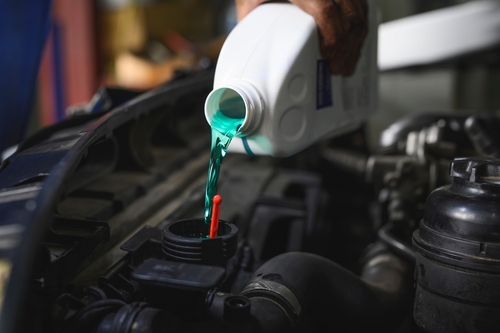
For vehicles built from 2008 onward, Volkswagen specifies G13 Coolant or G12 EVO Coolant — both are OAT (Organic Acid Technology) formulas in a distinctive violet or purple color. Older models (pre-2008) typically used G12 or G12+, which appear red or pink. The key rule: never substitute a generic or “universal” coolant, regardless of price.
Here’s why that matters. VW coolant formulas are nitrate-free, phosphate-free, silicate-free, and amine-free — precisely because VW engines contain aluminum heads, copper radiators, and rubber seals that react badly to the mineral additives found in cheaper coolants. Generic coolants often contain silicates or phosphates that attack those seals and sensors over time. And here’s a scenario worth knowing: if you mix two incompatible coolant types, the fluid can gel, clog the heater core, or strip out all the corrosion inhibitors at once. That’s not a slow problem — it can happen fast. When in doubt, check the stamp on your expansion tank or your owner’s manual, and confirm with our service team at Frank Boucher Volkswagen of Racine.
VW Coolant by Model
| Model | Coolant Type | Notes |
|---|---|---|
| VW Atlas | G13 / G12 EVO | 2018–present; violet/purple color |
| VW Tiguan | G13 / G12 EVO | 2009–present; never use green or universal |
| Jetta / Golf GTI / Golf R | G13 / G12 EVO | 2008–present VW Group spec |
| Taos / Atlas Cross Sport | G13 / G12 EVO | All current trims; same OAT formula |
| ID.4 / ID. Buzz (EV) | G13 / G12 EVO | EV cooling loop still needs VW-spec fluid |
| MK4 Golf / Early Passat / Beetle | G12 / G12+ | Pre-2008; red/pink OAT coolant |
What Does VW Engine Coolant Actually Do?
VW engine coolant isn’t just antifreeze. It’s a multi-function fluid that keeps your entire cooling circuit healthy, your water pump sealed, and your engine protected in every season.
The most obvious job is temperature regulation — coolant absorbs heat from combustion and carries it to the radiator, where it disperses into the air. But on a turbocharged VW engine, that cooling loop is under serious stress. VW engine coolant also raises the fluid’s boiling point, so the system stays pressurized and stable under acceleration. It drops the freezing point down to about -34°F — critical for anyone driving through a Wisconsin winter.

Beyond temperature, the right coolant contains corrosion inhibitors that protect aluminum heads, cast iron blocks, and copper components from oxidation and scale buildup. It also lubricates the water pump seals, which are easy to overlook until the pump starts to leak. Choosing the wrong coolant — or skipping a flush too long — strips those inhibitors out, and the damage that follows (a corroded radiator, a failed water pump, a clogged heater core) is neither quick nor cheap to fix.
What VW Engine Coolant Protects Against
- Overheating in the summer heat and under hard acceleration
- Freezing in sub-zero Wisconsin winters (protection to approximately -34°F)
- Corrosion of aluminum cylinder heads, radiators, and copper components
- Scale and deposit buildup inside the radiator and heater core
- Premature water pump seal wear and leaks
- Electrolytic damage from incompatible fluid mixing
Is It Safe to Use Universal or Off-Brand Coolant in a Volkswagen?
No — and this is one of the most costly mistakes VW owners make. Grabbing a jug of “fits all makes and models” coolant from a gas station might seem harmless, but it can cause serious long-term damage to a Volkswagen’s cooling system.
The problem comes down to chemistry. Off-brand and universal coolants often contain silicates, phosphates, or nitrates — additives that VW specifically engineers its cooling systems to avoid. Those compounds react with the aluminum components and rubber seals in VW engines, causing corrosion from the inside out. You might not notice it for months, but eventually it shows up as a leaking water pump, a damaged radiator, or a heater core that’s partially clogged with deposits. One reference point worth keeping in mind: mixing two incompatible coolant types — say, a green glycol-based universal with G13 Coolant — can cause the fluid to thicken and lose its protective properties almost immediately. If someone topped off your VW with the wrong type and you’re not sure what’s in there now, a full flush and refill with the correct G12 EVO Coolant or G13 is the right move. The service team at Frank Boucher Volkswagen of Racine can test the coolant and tell you exactly where things stand.
VW Coolant Color Guide
| Formula | Color | Era | Compatible With |
|---|---|---|---|
| G12 / G12+ | Red / Pink | Late 1990s–mid 2000s | Pre-2008 models |
| G12++ / G12 EVO | Violet / Purple | 2000s–present | G12, G12+, G13 |
| G13 | Violet / Purple | 2008–present | G12+, G12++, G12 EVO |
| Universal (avoid) | Green / Yellow | N/A | Not VW-approved |
Keep Your VW Protected With the Right Coolant Service
Coolant is one of those maintenance items that’s easy to put off — until something expensive breaks. The right Volkswagen coolant, in the correct dilution, changed on schedule, is one of the simplest and most cost-effective ways to protect a VW engine for the long haul. Whether it’s a Tiguan handling school pickups or an Atlas putting on highway miles, the cooling system is working every single time the engine runs. Our team at Frank Boucher Volkswagen of Racine uses only factory-approved G13 and G12 EVO coolant — the same specs VW engineers designed your engine around. Keep it right, and that engine will thank you for it.
Schedule Coolant Service at Frank Boucher Volkswagen of Racine
Not sure what’s in your cooling system right now? Or just know it’s been a few years since the last flush? Scheduling a service appointment at Frank Boucher Volkswagen of Racine in Racine, WI, is a straightforward next step. Our service team can test your current coolant condition, confirm the correct spec for your model year, and handle the flush and refill with genuine VW-approved fluid. Book online, give us a call, or stop by — it’s the kind of thing that takes an hour and saves you a lot of headaches down the road.
Need a Coolant Level Check?
Don’t risk engine damage. Let our VW-certified technicians inspect your system today.
Frequently Asked Questions About Volkswagen Coolant
What coolant does a Volkswagen use?
Most VW models from 2008 onward use G13 Coolant or G12 EVO Coolant — both are violet/purple OAT formulas. Pre-2008 models like the MK4 Golf and early Passat used G12 or G12+, which are red or pink. Always check your owner’s manual or the stamp on the expansion tank.
Can I use universal or “fits all” coolant in my VW?
No. Generic and universal coolants often contain silicates, phosphates, or nitrates that react poorly with VW’s aluminum components and rubber seals, leading to corrosion, seal damage, and eventual cooling system failure. Always use VW-spec coolant.
What is the Volkswagen Tiguan coolant type?
The Volkswagen Tiguan coolant type is G13 or G12 EVO — a violet- or purple-colored, glycerin-based OAT formula. This applies to the 2009 Tiguan through current model years. Don’t use green, yellow, or generic coolant.
What is the VW Atlas coolant type?
The VW Atlas coolant type is G13 or G12 EVO, consistent across all model years from 2018 to present. Always dilute concentrated coolant with distilled water — never tap water, which can introduce minerals that cause scale buildup.
Is G12 EVO coolant backward compatible with G13?
G12 EVO Coolant is backward compatible with G12+, G12++, and G13, making it a safe upgrade for any modern VW. You don’t need to flush G13 out before adding G12 EVO — they’re fully compatible.
How often should VW coolant be changed?
Volkswagen recommends a coolant flush every 30,000 to 50,000 miles, or at the first sign of cooling system issues. In climates like Racine, WI — with cold winters and warm summers — checking coolant condition annually is a smart habit. If the fluid looks murky, rusty, or brown, it’s time for a flush.
What does the Volkswagen coolant warning light mean?
A red flashing thermometer or coolant warning light indicates that the coolant temperature is too high or the coolant level is low. Pull over safely, shut off the engine, and let it cool for at least 30 minutes before opening the hood. Hot, pressurized coolant can cause burns — never remove the cap on a warm engine.
0 comment(s) so far on Volkswagen Coolant: What Type of Coolant Do the Models Use?